
Furnace Repair Cost: What You Should Actually Pay in 2026
Prices last reviewed October 2026.
The average furnace repair across our service areas runs $150 to $900 in 2026, with the national average sitting around $350. Simple fixes like flame sensor cleaning or thermostat replacement come in under $225. Major repairs like heat exchanger or gas valve replacement can reach $1,200 to $2,400.
Furnaces work hardest where winter nights are coldest, and older systems show their age first. See local furnace repair pages for San Jose, Richmond, Gilroy and Magna.
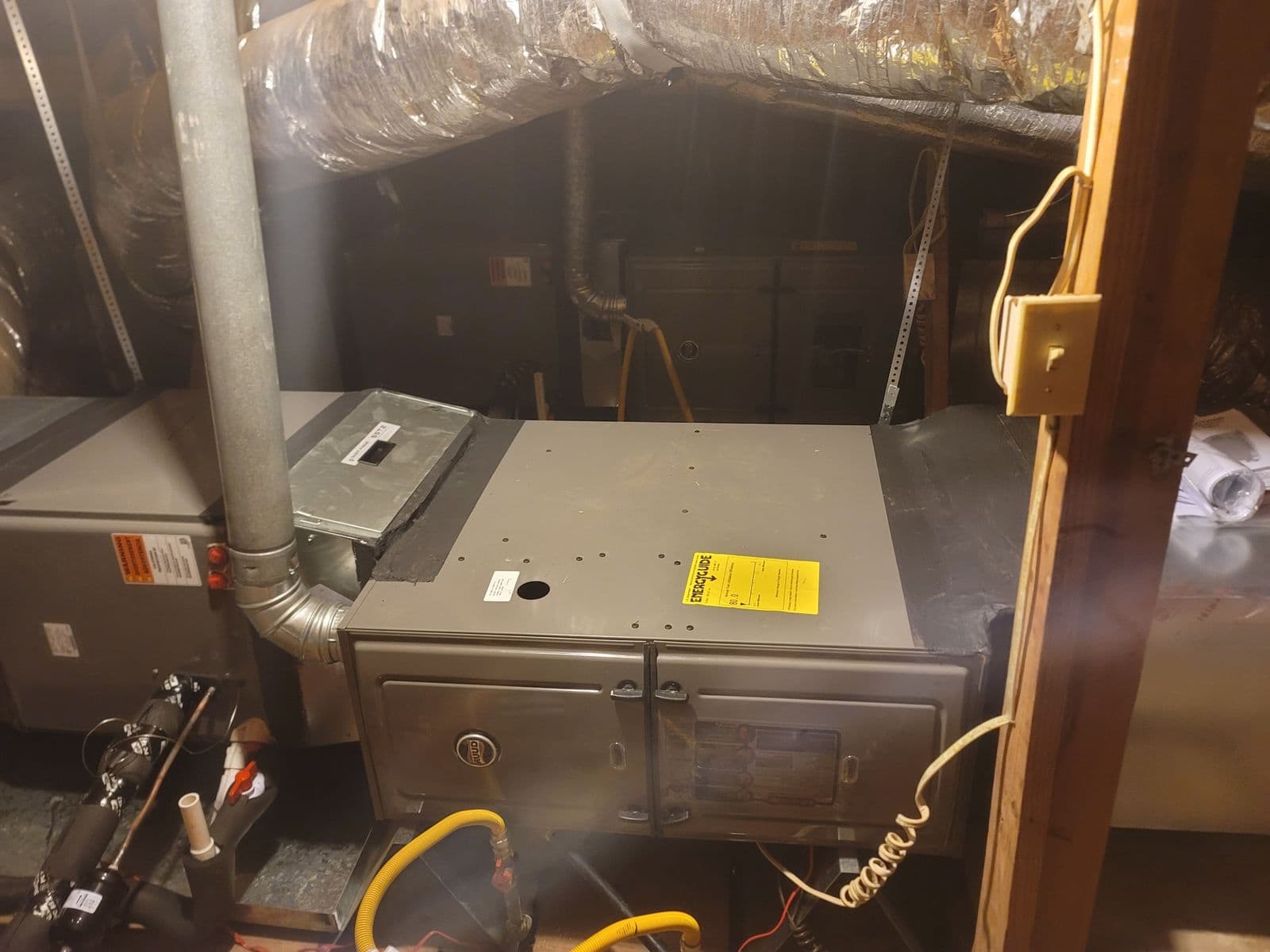
Furnace Repair Cost By Repair Type
| Repair Type | Typical Cost | What It Is |
|---|---|---|
| Service call / diagnostic | $69 to $129 | Tech arrives, identifies the problem, quotes the fix |
| Flame sensor cleaning | $120 to $220 | Most common "no heat" call, quick fix |
| Thermostat replacement | $180 to $550 | Including smart Wi-Fi models |
| Ignitor replacement | $220 to $450 | Failed hot surface ignitor |
| Pressure switch replacement | $210 to $420 | Safety switch that monitors venting |
| Capacitor replacement | $180 to $380 | For the blower motor |
| Limit switch replacement | $200 to $400 | Safety switch for overheat protection |
| Draft inducer motor | $450 to $950 | Motor that moves exhaust gases |
| Blower motor replacement | $550 to $1,100 | The main air moving motor |
| Gas valve replacement | $500 to $1,100 | Valve controlling gas flow |
| Control board replacement | $450 to $950 | The furnace's brain |
| Heat exchanger replacement | $1,200 to $2,400 | Major repair, often triggers a replacement decision |
| Flue / venting repair | $300 to $900 | Depends on length and materials |
Where Furnace Repair Matters Most
Most Florida homes heat with heat pumps or electric strip heat, so furnace repair is a smaller part of the work in Jacksonville and Orlando.
California and Utah are different. Gas furnaces are common, winter nights are cold enough to need dependable heat, and a furnace that sat idle through summer is often the first thing to fail when the weather turns.
Cold snaps in the Salt Lake Valley can drop below 20°F, which is hard on blowers and heat exchangers. Southwest Utah has milder days but still freezes at night.
See furnace repair in Magna and furnace repair in Washington.
Furnace Repair Cost By City
| City | Service Call Fee | Average Common Repair | Average Major Repair |
|---|---|---|---|
| Jacksonville, FL | $69 to $89 | $200 to $450 | $800 to $1,600 |
| Orlando, FL | $69 to $89 | $200 to $450 | $800 to $1,600 |
| Bakersfield, CA | $79 to $119 | $230 to $500 | $900 to $1,850 |
| Fresno, CA | $79 to $119 | $230 to $500 | $900 to $1,850 |
| San Jose, CA | $99 to $149 | $300 to $650 | $1,100 to $2,400 |
| Gilroy, CA | $89 to $139 | $270 to $600 | $1,000 to $2,200 |
| Spring Valley, CA | $79 to $119 | $230 to $500 | $900 to $1,850 |
| San Bernardino, CA | $79 to $119 | $220 to $490 | $900 to $1,800 |
| Redding, CA | $79 to $119 | $240 to $520 | $920 to $1,900 |
| Richmond, CA | $99 to $149 | $290 to $625 | $1,075 to $2,350 |
| Washington, UT | $69 to $109 | $210 to $475 | $850 to $1,750 |
| Magna, UT | $69 to $109 | $210 to $475 | $850 to $1,750 |
The Most Common Furnace Repair Calls We See
- Dirty flame sensor ($120 to $220). One of the most common causes of "furnace not heating" calls. The sensor gets coated with carbon and stops detecting the flame, which shuts the furnace down as a safety measure. Cleaning usually solves it in about 20 minutes.
- Ignitor failure ($220 to $450). Hot surface ignitors crack and fail, most often on systems over 5 years old. Replacement is straightforward.
- Short cycling ($180 to $500). Usually traces back to a dirty filter, closed registers or a failing control board. Diagnosis decides the repair.
- Blower not running ($180 to $1,100). Could be a failed capacitor (the cheaper fix) or a failed blower motor (the bigger one).
- Strange smells on startup ($0 to $300). Dust burning off on the first run of the season is normal. A persistent burning smell usually means a cracked heat exchanger or an electrical short. Both are dangerous and need immediate diagnosis.
- Banging or rattling ($120 to $800). Usually a loose blower wheel, failing bearings or duct expansion.
- Furnace blowing cold air ($150 to $900). Many possible causes, from thermostat settings to a failed gas valve. This is a diagnostic first call.
Carbon Monoxide Safety
A cracked heat exchanger or a blocked vent can put carbon monoxide into your home. Keep a working carbon monoxide detector on every level and near bedrooms, and replace the batteries each fall.
If the alarm sounds, get everyone outside and call 911. The CPSC carbon monoxide guide explains what to do.
When Furnace Repair Stops Making Sense
Consider replacement instead of repair if:
- The heat exchanger is cracked or leaking (a safety issue, so replacement is almost always smarter)
- The furnace is over 15 years old
- The repair costs more than 50 percent of a replacement
- You have had multiple repairs in the last 24 months
- The system is severely undersized for the home
A quick way to run the math: multiply the repair cost by the age of the system in years. If the result is over $5,000, replacement usually wins.
See the furnace installation pricing guide and furnace replacement in Fresno.
More resources: Heat pump repair costs. External: ENERGY STAR furnace guide.
How much does furnace repair cost?
Most repairs cost $150 to $900 in 2026, and the national average is about $350. Simple fixes like flame sensor cleaning come in under $225, and heat exchanger or gas valve replacement can reach $1,200 to $2,400.
Why does my furnace turn on and then shut off?
A dirty flame sensor is one of the most common causes. A failing ignitor, a clogged filter or a limit switch fault can also do it. A technician can usually fix it in one visit.
Is a burning smell from my furnace dangerous?
Dust burning off on the first run of the season is normal. A smell that persists, a carbon monoxide alarm or soot near the furnace is not. Turn it off, leave the house if an alarm sounds and call for help.
When should I replace my furnace instead of repairing it?
Consider replacing when it is over about 15 years old, when a repair costs more than half of a new furnace, or when a technician finds a cracked heat exchanger.
These are typical ranges across our service areas. Your price depends on your equipment, your home and what the technician finds, so we explain the repair or the options and give you the price before any work begins.